





About
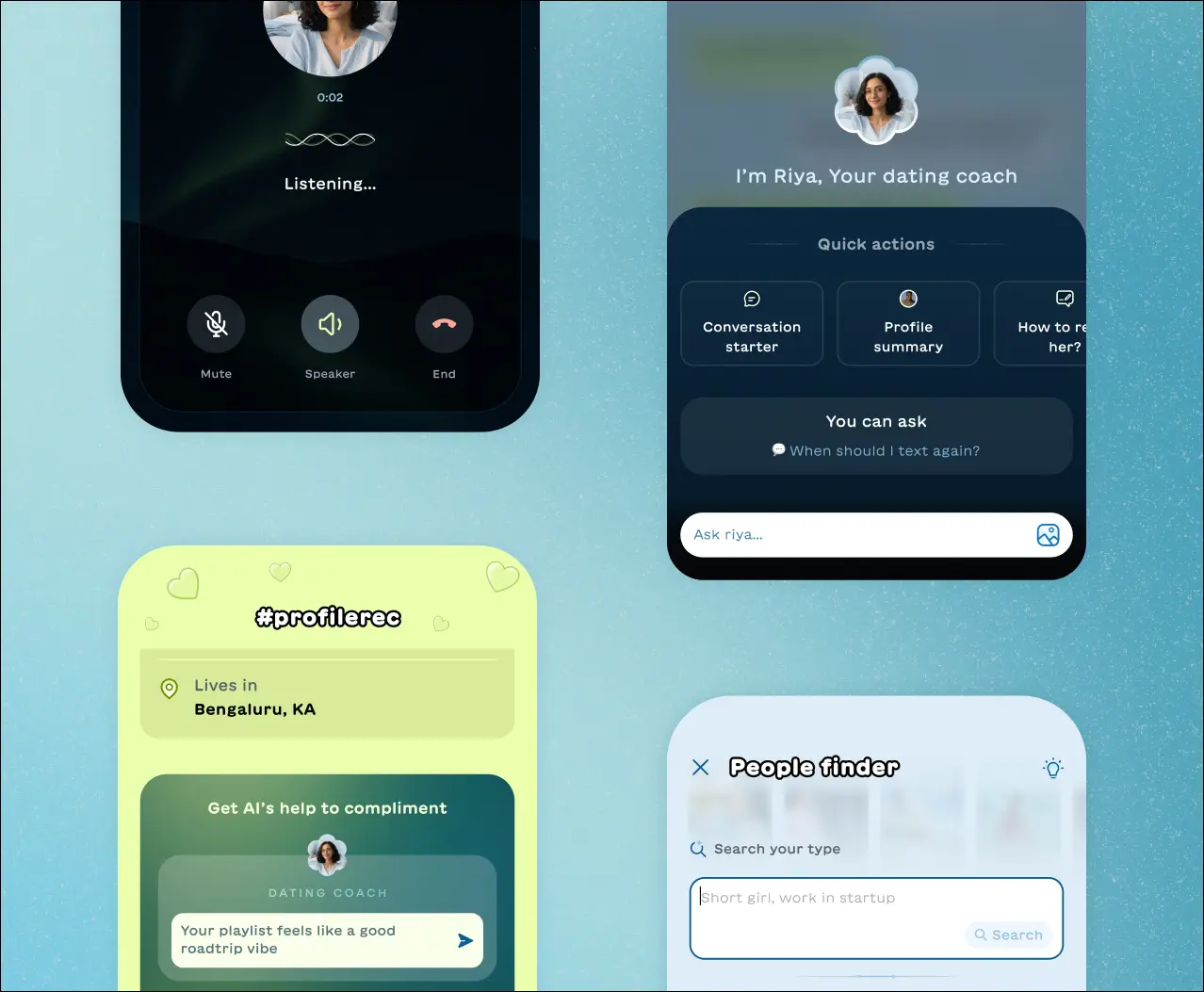
Schmooze is a dating app that matches you on personality, not just looks. You swipe on memes, use AI search, or talk to an AI matchmaker — the app figures out your vibe and finds people who match it.
Role:
Everything design
Strategy
Team:
Dewanshi
(Sr designer)
Timeline:
2023-26
Desc:
How we got users to build better profiles, without being intrusive
The challenge
Your matching algorithm is only as smart as the profiles you feed it. A half-empty profile with a blurry photo and a bio that says "ask me anything" is useless to the algorithm. Garbage in, ghosting out.
We'd kept onboarding lean on purpose, get people in fast, ask for the rest later. Good for signup numbers, rough for match quality. Women users in particular left more blank, and incomplete profiles on both sides meant weaker matches for everyone.
The challenge wasn't "make people fill out forms." It was: raise profile quality over the course of normal use, without ever making users feel nagged.

Meeting people where they already are
Rather than building one big "complete your profile!" screen that everyone learned to ignore at that time. we planted small, contextual nudges throughout the app - each one timed to a moment where the request felt natural instead of needy.
Under the match profile. When you're looking at someone you might match with, we slipped a quiet prompt beneath their nicely filled-out sections: add your photo / bio / prompt to improve your chances. Gender-specific copy, no modal, no guilt trip - just a nudge delivered at the exact moment you're feeling the gap between their effort and yours. 14% of users who saw it went and filled something in.
Edit profile from a meme swipe. The one I'm fondest of. Swipe right on an Office meme, and we'd offer to drop "The Office" straight into your profile. No navigating, no typing. You said yes, because of course you did.


Verification nudge. When an unverified user reacted to a verified profile, we nudged them to verify. That single prompt drove 15% of all verifications on the platform.
What happened?
The lesson: The best moment to ask for a piece of profile data is the instant the user just revealed it themselves. Catch the interest while it's warm - don't make them recreate it from memory later.

Ask for matches - letting users do the nudging
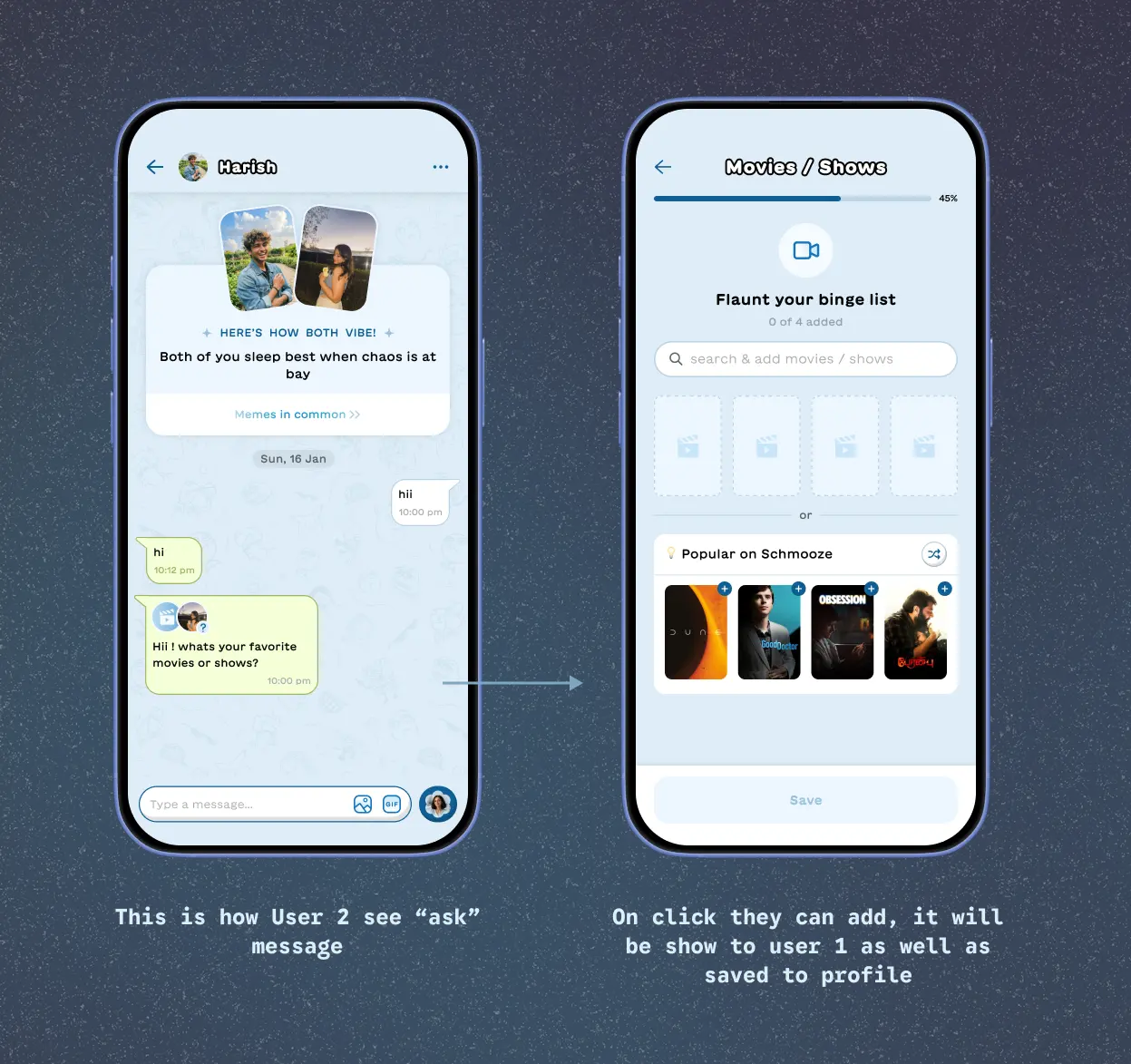
People in chatrooms often wanted to know more about their match, but the match's profile was missing the very thing they were curious about.
An "Ask for matches" button in the chat lets you request a specific detail from your match. If they answer, it arrives as a DM and gets added to their profile at the same time. Profile completion went up, not because the app pestered anyone, but because another human did. A request from a cute match carries a weight no system notification ever will.
The lesson: Sometimes the most effective nudge isn't from the product at all. It's from the person on the other side of the screen, and your job is just to hand them the tool.
AI as a profile building co-pilot
AI Prompt Writer. Dating-app bios are famously, reliably bad - and the data backed it up: women were completing prompts at 30–35% versus around 65% for men. So we added an AI assist that offered to sharpen whatever you typed, and called out the low-effort stuff (the emoji-only bio, the one-word answer) with a nudge to try again.

AI Photo Selection. The selfie-to-gallery flow from Case Study 1 lives here too, since it's as much a profile-quality tool as an onboarding one. Behind a paywall its adoption was moderate, but the quality lift was real. Together, the AI profile features pulled in 5–10% of daily revenue - not bad for a couple of features whose main job was getting people to write a better sentence.
Meme swiping dropping off
The more memes a user swipes, the better the algorithm understands them. Better understanding means better matches, and better matches mean retention. So meme swiping wasn't just a feature — it was the engine behind everything.
First match reaction rate improved by 30%. A small progress widget on the meme screen told users how close they were to their first profile suggestion. It made the wait feel purposeful instead of random, and users who understood that swiping memes leads to matches were far more likely to stick around and react when one showed up.
Schmooze personality: Back when Schmooze operated in the US, we'd shipped Schmooze Wrap, a personality summary built from meme behaviour. It got real traction and shares outside the app. That validated the idea that people genuinely want to see a reflection of themselves through the memes they found funny. We took that insight and built something more continuous for the India product.
When gamification backfired
The hypothesis. We built a Behaviour Score: a single visible number summarizing how a user behaved across three areas - meme swiping, profile quality, and trust & safety. The theory was elegant in that way that doomed theories often are: make behaviour visible, and people will self-correct.
What actually happened. It moved exactly one of the three needles - meme swiping. Profile quality and trust & safety didn't budge. Users either didn't get what the number meant or didn't care enough to chase it. Turns out a vague score is a weak motivator when you can't see what it does for you.
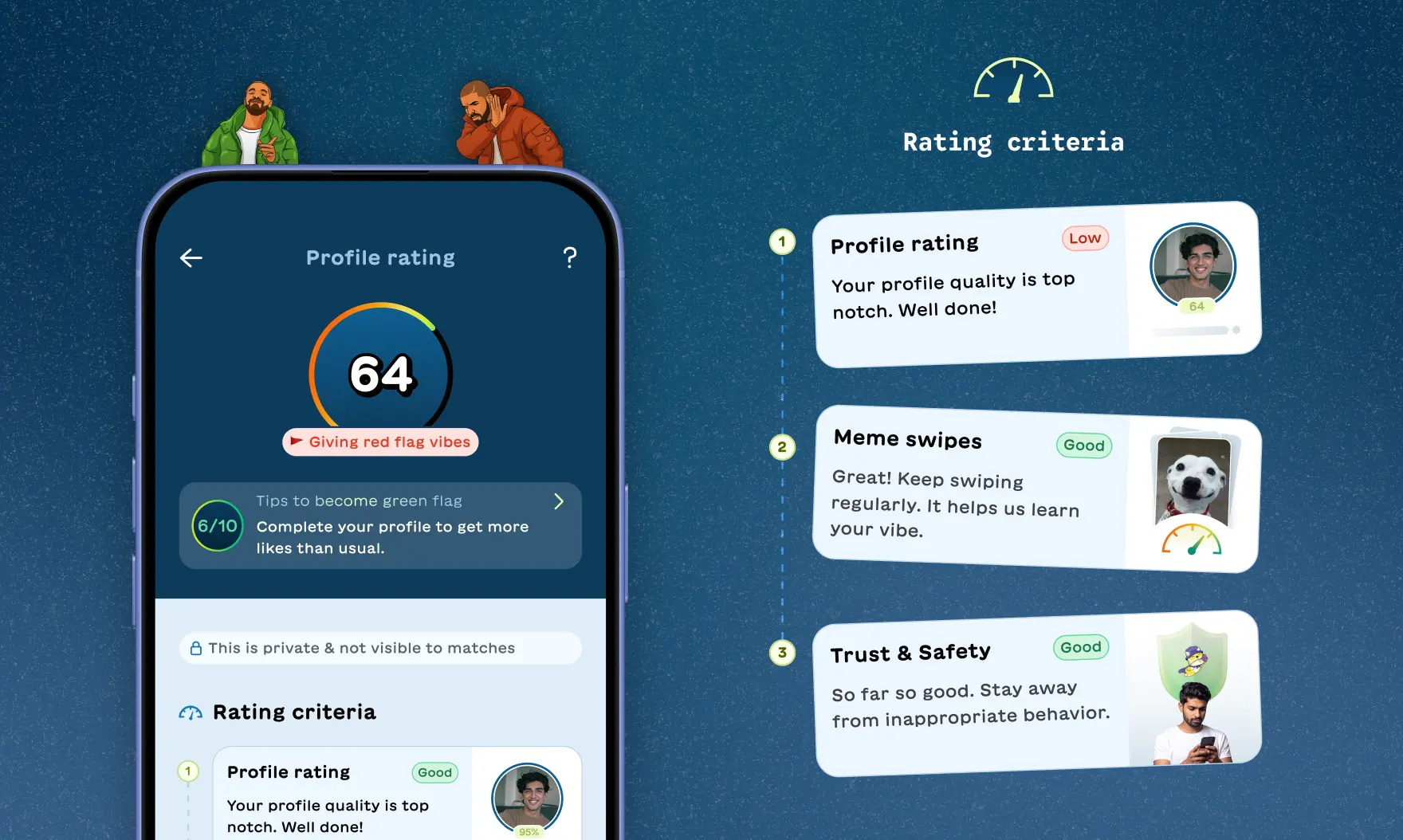
The one piece that survived. When someone was rage swipe, we'd interrupt with a modal and surface Shortcut, the feature built for people who just want matches now. It worked, so it stayed. The visible score and everything else got retired. Three problems needed three real solutions, not one elegant dashboard.
The lesson: Not every problem wants to be gamified. A score that doesn't clearly pay off just adds noise to the screen and weight to the user's head. Three problems needed three real solutions, not one elegant dashboard.

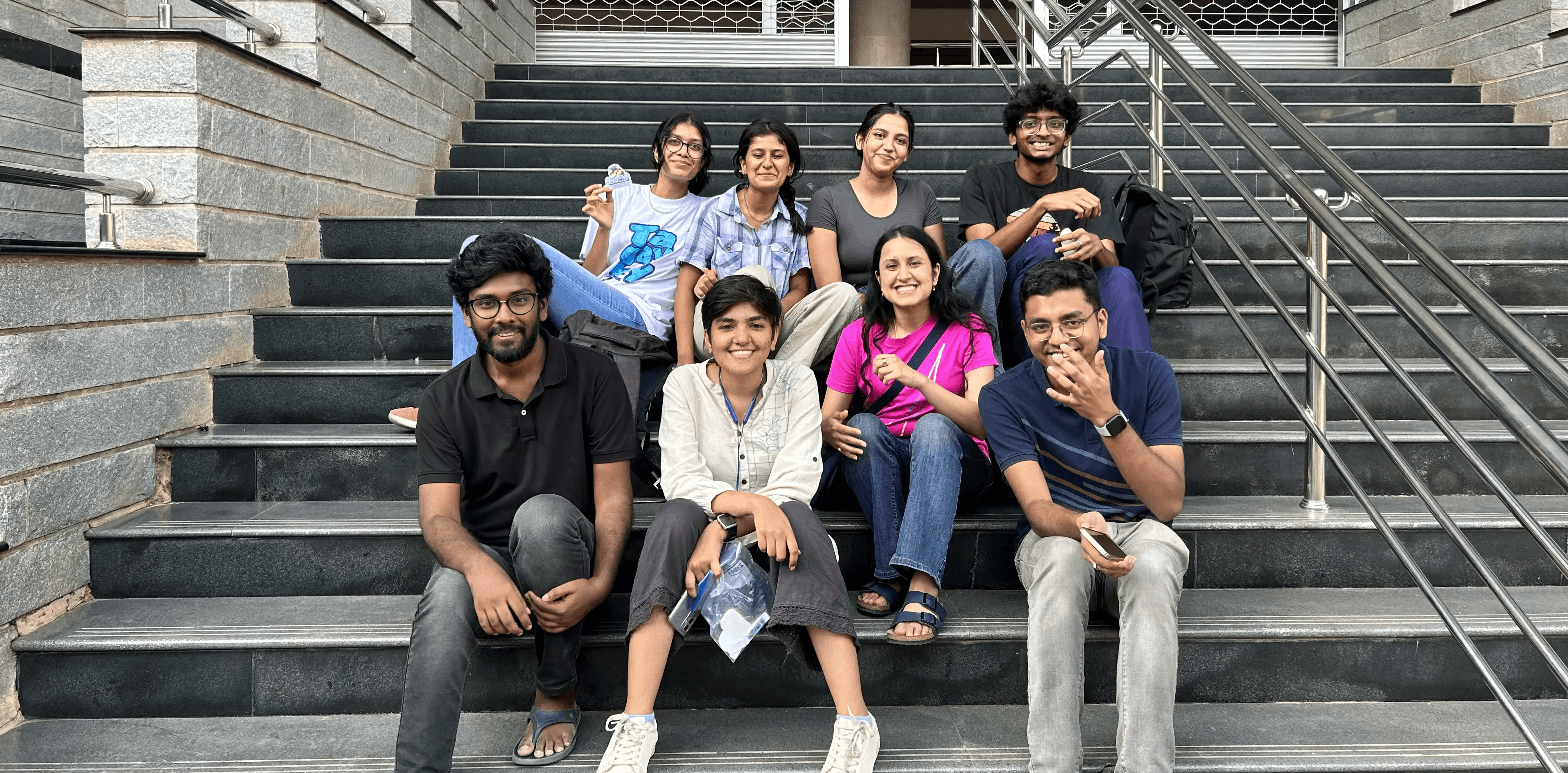
2023 user research before india launch